South Dakota Garden Climate: Soil Drainage, Wind, and Watering
South Dakota gardeners often have to manage several conditions at once: soil that drains too slowly or too quickly, wind that dries plants and beds, and watering needs that change with the weather. The best planting calendar starts with your particular site. Here’s how to assess it and adapt your garden layout and care.
Why your garden site matters
South Dakota does not offer every garden the same growing conditions. Soil texture, slope, exposure, nearby structures, and local weather all affect how a bed holds water and how quickly plants dry out. Even neighboring yards can behave differently. A planting calendar is useful, but it cannot account for every pocket of shelter, drainage, or wind exposure in your yard.
That is why it helps to think of a calendar as a planning framework rather than a promise that every task belongs on a fixed day. A sheltered bed with soil that drains well may be ready for planting under different conditions than an exposed, low-lying spot. Watch the site itself, not only the month.
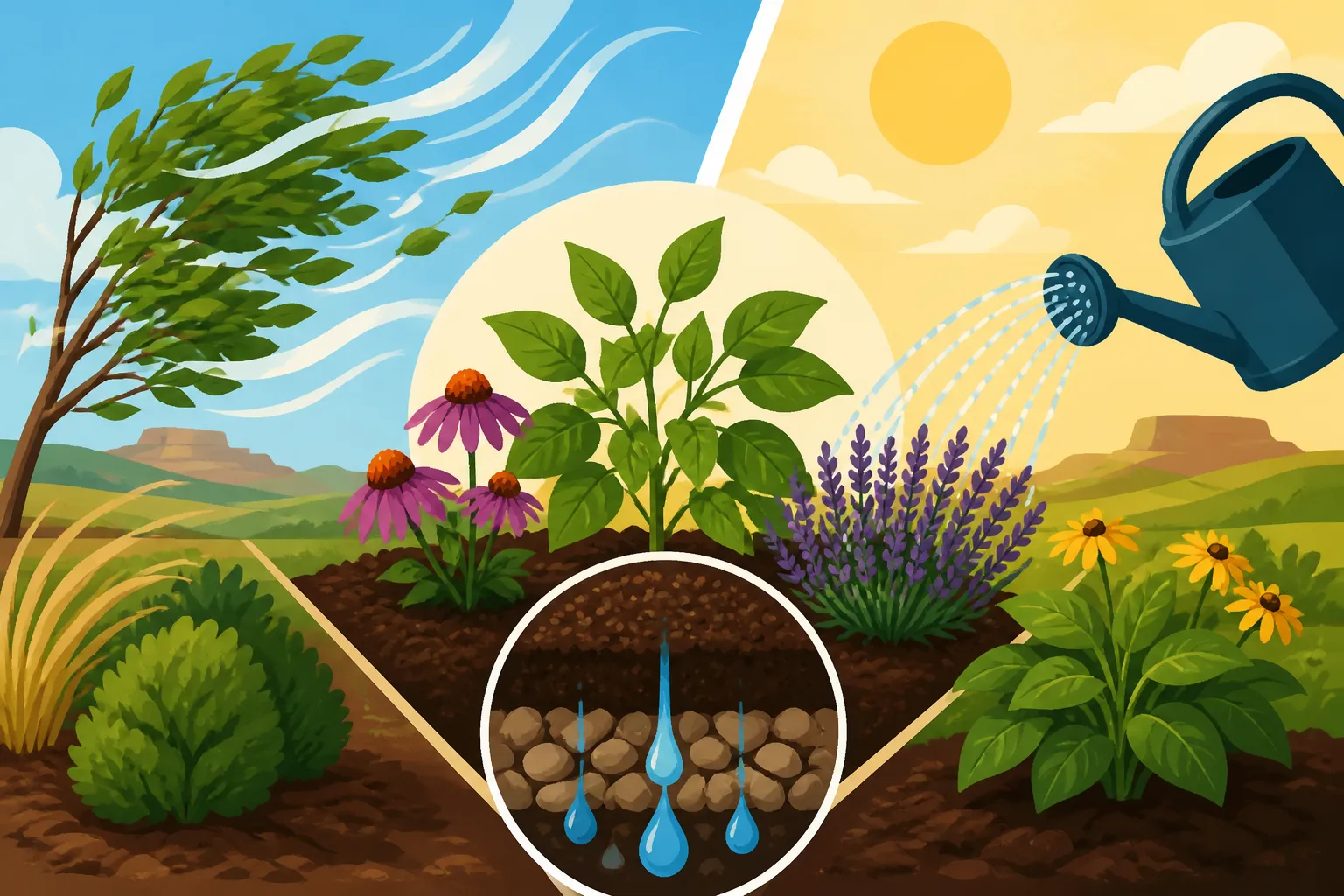
Wind, water, and soil drainage are closely connected. Wind increases moisture loss from the soil and plant leaves. Soil that drains rapidly may not hold enough water between irrigations, while poorly drained soil can leave roots short of oxygen. A plant may wilt in either situation, so the appearance of the foliage alone does not always reveal the cause.
Start by observing your garden in different conditions. Notice where water collects after rain, where the soil dries first, and which areas remain sheltered or exposed. Pay attention to how quickly the surface dries and whether plants in a particular bed show stress before plants elsewhere. These observations help you decide where to plant, where to improve the soil, and where a change in watering or protection could make a difference.
For a broader overview of choosing crops and matching them to your schedule, see South Dakota Vegetable Gardening: Crop Selection and Timing. For seasonal planning, When to Plant in South Dakota: Frost Timing and Safe Dates can help frame planting decisions. Neither replaces checking the conditions of your own bed.
Assess soil drainage before you plant
Drainage affects how much water stays near roots and how much moves away. If water drains too slowly, roots may remain in saturated soil, and seedlings can struggle to establish. If water drains too rapidly, the bed may dry out soon after rain or watering. In either case, plants can look stressed even when you have been paying attention to the weather.
Soil appearance can offer clues, but a simple drainage check is more useful than guessing from the surface. South Dakota State University Extension recommends digging a hole 8-10 inches deep and filling it with water to check garden drainage. Watch what happens rather than assuming that every patch of soil behaves the same way.
If water remains in the hole after 12 hours, choose another site or use raised beds, South Dakota State University Extension advises. A low area that stays wet may not be a good place for vegetables that need well-drained soil. A raised bed can provide a way to garden above a wet or compacted area, but it still needs suitable soil and consistent moisture management.
Read the symptoms in context
A drainage problem is not always obvious. Look for patterns across the bed:
- Water that sits on the soil surface after rain may indicate that water is not infiltrating readily.
- Soil that stays soggy or feels slick for an extended period may be slow to drain.
- Plants that repeatedly wilt in wet soil may have roots affected by poor aeration rather than a lack of water.
- Soil that dries quickly after rain or watering may drain rapidly, especially if it is sandy, shallow, or exposed to wind.
- Crusting at the surface can make it harder for water to enter the soil, even when the soil below is dry.
These signs can overlap. Compacted soil, a slope, runoff from nearby hard surfaces, and the amount of organic matter can all influence what you see. Check soil moisture below the surface before deciding to water. The top layer may be dry while the root area still holds moisture, or it may appear damp while the soil beneath is dry.
A drainage check gives useful information, but it is not a full soil diagnosis. If the test suggests a problem, consider whether the location itself is contributing. Water may naturally collect in a low spot, or it may flow toward the bed from a nearby slope. Moving the garden or choosing a raised bed can be more practical than trying to change the underlying site.
Improve the bed without overworking it
When soil drains poorly, avoid treating extra watering as the answer to wilting. Roots in saturated soil may be unable to take up water effectively. First identify whether the bed stays wet, whether runoff is entering it, and whether compacted soil is limiting infiltration. How to Tell If Your Garden Soil Drains Well Enough for Vegetables offers more help with evaluating a garden bed.
When soil drains too quickly, the challenge is different. The root zone may lose moisture rapidly, so the gardener needs to conserve water and check moisture more often. Organic mulch can slow evaporation, while suitable soil preparation can help improve the bed’s ability to hold moisture. For specific strategies in dry, fast-draining conditions, see Managing Fast-Draining Garden Soil Under Dry South Dakota Winds.
Avoid adding material or changing the soil based only on a general rule. Different soils respond differently, and amendments need to suit the problem. Soil preparation also affects how water enters and moves through the bed. For help with those decisions, see Spring Garden Prep Checklist for South Dakota Soils and Seeds and Preparing Vegetable Soil: Depth and Drainage for South Dakota Beds.
Raised beds can be useful where the native soil stays wet or is difficult to work. They can also drain more quickly than the surrounding ground, which means they may need closer attention during dry, windy weather. Treat the bed as its own growing environment: check moisture, watch plant response, and adjust watering to what the root area needs.
Plan for wind rather than fighting it
Wind can dry soil, stress young plants, and make newly transplanted seedlings harder to establish. It can also carry dust and debris and cause damage when stems or leaves are repeatedly buffeted. An open garden may be more exposed than a bed beside a building, fence, or established planting, but barriers can create their own challenges if they block too much light or restrict airflow.
Before planting, look at how wind moves through the yard. Observe which beds receive the strongest exposure and whether nearby structures funnel gusts into particular areas. Wind direction and strength can shift, so a single observation may not tell the whole story. A garden diary can help you notice recurring patterns, especially when paired with notes on plant stress and soil moisture.
Choose the location with care
If you have a choice, place tender plants and young transplants where they receive some protection without being shaded for too much of the day. A sheltered location can reduce drying and give seedlings a less exposed place to establish. At the same time, avoid assuming that a wall or fence is automatically a good garden site. The surrounding area may create shade, hold heat, or alter how water drains.
Windbreaks can reduce direct exposure, but they should not create a stagnant, damp pocket. Good air movement matters because foliage that stays wet can be more prone to disease problems. Think of shelter as moderation rather than complete enclosure: the aim is to lessen harsh exposure while leaving the garden with adequate light and airflow.
For garden beds that receive persistent gusts, crops with sturdy growth habits may be easier to manage than delicate plants. Plant height and support needs also matter. Tall plants can catch the wind, and unsupported stems may bend or break. A planting plan that considers mature size can reduce crowding and make it easier to add supports without disturbing nearby roots.
Use barriers thoughtfully
Temporary covers can protect young plants from wind, but they must be secured and monitored. A loose cover can flap against foliage or be lifted by gusts. Choose a covering that fits the bed, anchor it securely, and check it after changing weather. Remove or adjust protection when conditions make it unnecessary or when it interferes with plant growth.
Permanent barriers need thoughtful placement as well. A solid fence may change wind patterns around the garden rather than simply stopping the wind. Observe what happens on both sides of a barrier before deciding where to put a bed. A porous barrier can allow some air movement while reducing exposure, but its effectiveness depends on the site and how it is installed.
For practical ways to protect plants in exposed beds, see Using Floating Row Covers in High South Dakota Winds. When the concern is protecting recently planted seedlings during a change in weather, Protecting Tender Transplants From Sudden Spring Cold Snaps may also help with planning. Wind protection is not a substitute for checking soil moisture: covered plants and sheltered beds still need attention.
Help transplants settle in
Young plants have not yet developed roots throughout the bed, so dry or windy conditions can affect them quickly. Before transplanting, make sure the bed is prepared and the soil is workable. After planting, check whether the root area is moist and whether plants remain upright. A plant that leans may need support or firmer contact between the soil and the root ball, while a wilted plant may need a closer moisture check.
Hardening off seedlings helps them adjust to outdoor conditions before they are planted in the garden. Move them gradually into the outdoor environment rather than treating indoor-grown plants as ready for immediate exposure. For further details, see Hardening Off Spring Seedlings Before Planting Out in South Dakota. If you are growing starts indoors, Timing South Dakota Seedlings Under Lights Before Planting Out can help connect indoor preparation to the outdoor planting window.
Water according to the root zone
Watering is not simply a matter of following a calendar. Rainfall, wind, soil texture, bed construction, plant size, and the stage of growth all affect how quickly the soil dries. A garden in a windy, fast-draining spot may need more frequent checks than a sheltered bed with soil that holds moisture. A recent shower may wet the surface without reaching the root zone.
South Dakota State University Extension says vegetables need regular watering of an inch or more per week. Treat that as a useful general benchmark, not a guarantee that every bed needs exactly the same amount. Rain contributes to the water plants receive, and local conditions can make the amount needed vary. Check the soil and plant response instead of relying only on a schedule.
Check below the surface
Before watering, feel the soil near the root area. Surface dryness alone can be misleading, especially after a brief shower or a period of strong wind. If the soil beneath the surface remains moist, adding more water may not help. If it is dry where roots are active, watering may be needed even if the bed looks damp on top.
A consistent check also helps you distinguish between water stress and other problems. Wilting can result from dry soil, but it can also occur when roots are damaged or when soil stays saturated. Check both the plant and the soil before reacting. If the bed is wet and the plant continues to wilt, more water could worsen the conditions around the roots.
Watch how plants respond after watering. If the water runs off or forms puddles, it may not be reaching the root zone evenly. If the soil dries quickly, consider whether wind exposure, texture, or shallow soil is contributing. Adjust your watering approach to the bed rather than applying the same routine everywhere.
Apply water efficiently
Watering near the soil rather than over the foliage can help keep leaves drier and direct water toward the roots. A soaker hose or drip system can make this approach easier in a vegetable bed, though any system needs monitoring. Check that water is reaching the intended area and that it is not running away from the plants or collecting where it should not.
Water gently enough to avoid washing soil away or exposing roots. If the surface is crusted or very dry, water may move across it instead of soaking in. Applying water in a way that allows it to enter the soil can improve its usefulness to plants. Mulch can also reduce evaporation from the soil surface, particularly in exposed beds, but keep it from pressing tightly against plant stems.
The most useful routine is one that combines observation with the weather. Check the garden after wind, heat, and rain, then adjust based on what the root zone is doing. Watering by habit without checking can leave some beds too dry and others too wet. For more on planning vegetable irrigation, see Watering South Dakota Garden Vegetables: Managing Weekly Inches.
Match watering to the bed
A raised bed, a container, and an in-ground garden do not necessarily hold water in the same way. Containers can dry more quickly because they have less soil volume and are exposed on more sides. Raised beds may drain readily, especially if filled with a loose, fast-draining mix. In-ground beds may hold water longer, particularly where drainage is slow.
Group plants with similar water needs where practical. This makes it easier to manage the bed without overwatering crops that prefer drier conditions or leaving thirsty plants short of moisture. Keep access to the soil in mind as plants grow, so you can check moisture without stepping on beds or disturbing roots.
Mulch can help conserve moisture and reduce soil movement during wind or rain. It is most useful when paired with good watering practices, not used as a replacement for them. If you change the mulch layer or add a new bed, observe how the soil dries afterward; the change may alter how often the garden needs attention.
Connect climate and soil to planting decisions
A local planting calendar can help you organize seed starting, direct sowing, transplanting, and succession planting. But the garden’s condition should guide the final decision. Soil that is too wet to work can be damaged by digging or foot traffic. A bed that dries rapidly may need preparation and moisture management before young plants are set out. A highly exposed garden may benefit from waiting until seedlings can be protected or choosing a more sheltered position.
For timing, soil, and weather, consider more than the expected frost risk. A crop may tolerate cool conditions but still struggle in cold, waterlogged soil. A warm-season transplant may be ready to leave its container but not ready for a windy, unsettled site. Looking at the whole growing environment helps prevent the mistake of treating a calendar date as a complete planting instruction.
Prepare before the planting window
Use the time before planting to assess drainage, prepare the bed, and arrange tools or protection. If the soil is compacted, wet, or difficult to work, wait until it is in suitable condition rather than forcing the task. Working very wet soil can damage its structure and make later water movement less predictable.
Check the bed’s exposure and decide where barriers, supports, or mulch will be useful. Make sure temporary protection can be anchored securely. If you plan to use irrigation equipment, check that it reaches the planting area and distributes water where roots will grow.
For a broader checklist of preparation tasks, see Spring Garden Prep Checklist for South Dakota Soils and Seeds. If you are weighing cool-season sowing against setting out warm-season transplants, Cool-Season Sowing vs Warm Transplants in South Dakota Gardens can help you plan around different crop needs.
Adjust for the season as it unfolds
Weather does not follow a perfectly predictable script. A stretch of wind can dry a bed that had recently been moist, while rain can leave a low area saturated. Recheck the garden as conditions change instead of assuming that last week’s watering pattern still fits.
Early in the season, pay particular attention to soil condition and the resilience of young plants. Later, larger plants may shade the soil and use more water, while fruiting crops can be sensitive to inconsistent moisture. Toward the end of the growing season, keep the remaining time and expected weather in mind when deciding whether a new planting is likely to mature.
If conditions are unusual, change the plan rather than trying to force the original schedule. Delay planting into a saturated bed, protect vulnerable transplants during strong wind, or choose a more suitable site for a crop that needs different conditions. The goal is to give plants a reasonable start, not to complete every task on a prewritten date.
Troubleshoot common garden problems
When a crop looks stressed, start with observation rather than adding water or fertilizer immediately. Look at the soil, the weather, and the pattern of symptoms. If the whole bed is affected, the cause may be environmental or related to the site. If only a few plants show symptoms, consider whether their location, roots, or handling differ from those of nearby plants.
| What you notice | What to check | Practical response |
|---|---|---|
| Plants wilt while the soil feels dry below the surface | Whether wind exposure or fast drainage is drying the root zone | Water as needed, reduce soil evaporation with mulch, and monitor the bed closely |
| Plants wilt while the soil is wet | Whether water is collecting or the bed drains slowly | Avoid adding water until you understand the drainage problem; consider a better location or a raised bed |
| Soil surface dries soon after watering | Whether water is running off, the surface is crusted, or the bed is exposed | Apply water gently and check whether it reaches the root area |
| Seedlings lean or show damage after windy weather | Whether they need shelter or support | Secure suitable protection and check that roots remain covered and stable |
| One part of the garden stays wetter than another | Whether slope, compaction, or runoff directs water there | Treat that area separately and consider relocating crops that need better drainage |
| A bed dries much faster than the rest of the garden | Whether it is raised, shallow, sandy, or more exposed | Check moisture more often and consider mulch or a less exposed location |
These are clues, not diagnoses. A plant can wilt because it is too dry, because its roots are damaged, or because saturated soil is restricting root function. The same weather can affect different crops differently, and a problem may involve more than one cause.
Keep brief notes about rainfall, watering, wind exposure, and plant response. Write down which parts of the garden dry first and which spots stay wet. This creates a useful record for future planting decisions and helps you avoid treating every bed as if it had identical soil.
If a change in watering does not improve the plants, broaden the assessment. Check for root damage, pests, disease, or nutrient issues rather than repeating the same response. For general vegetable garden planning, South Dakota Vegetable Gardening: Crop Selection and Timing can help you revisit whether the crop suits the site and season.
Build a garden routine around your site
A resilient garden does not depend on perfect weather. It depends on noticing what the site is doing and adjusting care to match. Keep your drainage observations, wind exposure, and watering checks connected. A fast-draining bed in an exposed spot presents a different challenge from a sheltered bed that stays wet, even if both are planted at the same time.
Use a simple routine:
- Before planting, check where water collects and where the soil dries quickly.
- Choose crops and bed locations that fit those conditions.
- Prepare the soil when it is workable, not when it is saturated.
- Protect young plants from excessive exposure while preserving light and airflow.
- Check moisture below the surface and account for rainfall.
- Reassess after major changes in weather.
- Keep notes so the next planting plan reflects what actually happened.
The most useful calendar is one that includes room for adjustment. A planting task may be ready on paper, but the soil may still be too wet or the forecast may bring conditions that challenge tender plants. Waiting for a suitable opportunity can be better than planting into a bed that cannot support healthy roots.
If a bed repeatedly performs poorly, consider changing its role or location instead of repeating the same approach. A wet area may suit a different kind of planting than vegetables that need good drainage. A wind-exposed bed may be better for sturdier crops or may need a carefully placed barrier. A fast-drying site may become more manageable with mulch, improved soil preparation, or closer moisture checks.
There is no single watering schedule or planting calendar that fits every South Dakota garden. The practical answer is to learn how each bed behaves, then make small changes based on what you observe. That approach makes it easier to respond to wind, soil drainage, and changing water needs without treating every wilted leaf as a reason to water more.
Frequently Asked Questions
Does a dry-looking soil surface mean the garden needs water?
Not necessarily. Check below the surface near the roots. Wind and sun can dry the top layer while the soil underneath remains moist. If the root area is still damp, adding water may not help.
What should I do if my garden bed drains slowly?
First confirm that the problem is persistent and consider whether water is collecting because of the bed’s location, slope, or soil condition. A different site or a raised bed may be a better option for vegetables that need well-drained soil.
Can wind make a garden need more frequent watering?
Yes. Wind can increase moisture loss from soil and foliage, so exposed beds may dry sooner than sheltered ones. Check the soil rather than relying on a routine that works in a less exposed area.
Are raised beds always easier to water?
Not always. They can help where native soil drains poorly, but a raised bed may also dry more quickly than surrounding ground. Check its root-zone moisture and adjust care to the bed’s conditions.
Sources
- South Dakota State University Extension — P 00123 V2 (PDF) (checked November 15, 2026)
Disclaimer
This article is for general informational purposes only and does not constitute professional advice. Laws, prices and regulations vary by location and change over time. Consult a qualified professional for guidance on your specific situation. South Dakota Gardening Guide is not a government agency and is not affiliated with any university extension, state department of agriculture or other government agency.