When to Plant in South Dakota: Frost Timing and Safe Dates
South Dakota gardeners often want a planting date they can put straight on the calendar, but spring frost risk shifts with location, weather, and crop type. A better plan combines frost information with soil conditions, plant tolerance, and the forecast. Here’s how to build a practical planting calendar without treating a statewide date as a guarantee.
What a South Dakota frost date can and cannot tell you
A frost date is a planning reference, not a promise about what the weather will do in a particular garden. The last spring freeze can arrive earlier or later from year to year, and a cold pocket in a yard may not behave like a nearby open site. The date on a map can help you compare risk and organize tasks, but it cannot remove that risk.
According to South Dakota State University Extension, its map shows the median (50th percentile) for the last spring date at or below 32 degrees Fahrenheit. A median is a midpoint marker in the historical record. It is not a guaranteed final frost date, nor does it mean a garden is safe from freezing as soon as the date passes.
That distinction matters because gardeners sometimes treat a frost date as a hard boundary: plant everything before it to gain time, or wait until it passes to do any outdoor sowing. Neither approach fits every crop. Some vegetables tolerate chilly conditions and can be sown while spring weather is unsettled. Tender plants can be damaged by cold after a night that does not match a map’s median, and they may also struggle in cold soil even when the forecast is frost-free.
Use the map as one part of a decision rather than as a planting order. Check which weather station or area the map represents, then consider whether your garden is warmer, colder, windier, or more exposed than that reference. For practical background on how the map relates to planting, see Normal Freeze Dates: South Dakota Spring and Fall Normals and Why One Frost Date Cannot Cover All of South Dakota.
A useful distinction is the difference between a frost date and a safe planting date. A frost date describes a past or expected weather threshold. A safe planting date depends on the plant and conditions around it. A cool-tolerant leafy crop may be suitable for a period when a heat-loving crop would be risky. Even plants in the same broad category can respond differently to cold, so use the seed packet or plant label for crop-specific guidance.
Frost also does not always affect every part of a yard equally. Air can cool unevenly across a property. Low spots, sheltered corners, slopes, walls, and wind exposure can all influence how conditions feel at plant level. A forecast for a nearby town is useful, but it may not capture the coldest corner of your garden. Keep notes as seasons pass: where frost damage appears first, which beds warm early, and which spots stay cold or wet.
The practical takeaway is not to ignore frost information. It is to interpret it correctly. Use the map to understand seasonal risk, then make planting decisions with the crop’s tolerance and your own site in mind.
Build planting windows around the crop, not one calendar date
A reliable planting calendar is a set of windows, not a single day when the whole garden changes from “too early” to “safe.” Start by dividing crops into broad temperature groups. Then decide which tasks belong in the early, transitional, and reliably warm parts of spring.
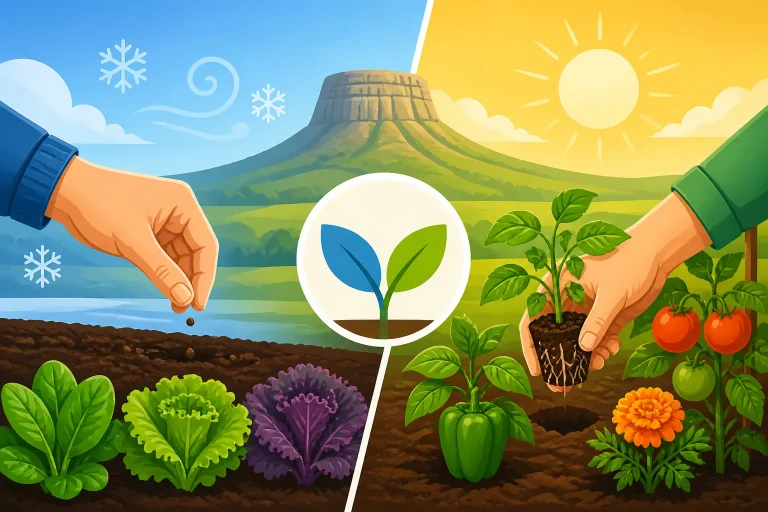
Cool-tolerant crops can often go into the garden earlier than tender summer crops. Peas and many salad greens are examples gardeners commonly consider for an early sowing window. Their ability to handle cool conditions does not make them immune to every freeze, nor does it mean they will grow well in waterlogged or extremely cold soil. It means their risk calculation differs from that of plants that need warmth. For ideas on sequencing early sowing and later transplants, see Cool-Season Sowing vs Warm Transplants in South Dakota Gardens and Sowing Peas and Greens Early While Holding Back Summer Peppers.
Tender, warm-season crops need a more cautious approach. Tomatoes, peppers, cucumbers, melons, beans, and similar crops can be stressed or damaged by cold. Their suitability depends not only on whether a frost is forecast, but also on soil warmth, overnight conditions, wind, and how well the seedlings have adjusted to outdoor life. A bright, mild afternoon is not enough evidence by itself that a tender plant will cope with a cold night.
A simple way to plan is to write down what the crop needs, rather than assigning every crop the same date:
| Crop or task | What to check before proceeding | Main concern |
|---|---|---|
| Cool-tolerant direct sowing | Soil condition, forecast, and crop guidance | Cold soil, frost exposure, or saturated beds |
| Tender transplants | Frost risk, overnight forecast, soil warmth, and plant condition | Cold injury and transplant stress |
| Warm-season direct sowing | Soil warmth, forecast, and seed packet guidance | Slow or uneven germination in cold conditions |
| Newly purchased plant packs | Acclimation, wind exposure, and forecast | Sudden changes after sheltered growing |
| Succession sowing | Remaining season, crop maturity guidance, and bed availability | A crop may not have enough favorable growing time |
This table is a decision aid, not a timetable. Read the crop’s packet or label for its particular requirements, and compare those instructions with current local conditions. If the package gives a range or temperature threshold, use the product information rather than substituting a general rule.
Planting windows can overlap. You do not have to finish one category of work before beginning another. A gardener might sow a cold-tolerant crop while keeping tender transplants indoors, then prepare beds and harden off seedlings as conditions improve. This staged approach spreads risk and keeps an unexpected cold snap from putting the entire garden at stake.
It is also reasonable to delay. A seedling held back briefly under suitable indoor conditions may be a better bet than one planted out into cold, exposed ground. But delaying indefinitely has trade-offs: seedlings can become stressed in their containers, roots can become crowded, and a crop may have less favorable weather left in which to mature. For warm-season crops, use the expected growing window and the crop’s maturity information to weigh those competing risks. Matching Days to Maturity to Northern South Dakota Seasons and Why Long-Season Crops Struggle in Northern South Dakota Gardens offer related planning considerations.
Choose a planting window for each crop group
A useful garden calendar begins with crop behavior. It does not require precise dates for every seed. Instead, assign each crop a category, note the conditions it needs, and choose a sensible window based on the weather and your site.
Early sowing for cool-tolerant crops
Cool-tolerant vegetables are often the first group gardeners consider for outdoor sowing. The key is to distinguish “can tolerate cool weather” from “will thrive in any cold, wet bed.” Seeds may sit in poor conditions rather than grow promptly, and young plants can still be affected by harsh weather.
Before sowing, check whether the bed is workable. Soil that is sticky, saturated, or easily compacted is a poor place to rush into planting. A bed that has drained and can be prepared without smearing or packing is a more promising starting point. Soil temperature can help explain whether conditions are suitable, but the appropriate threshold varies by crop, so follow the specific seed guidance rather than applying one temperature to all vegetables.
Direct sowing is useful when a crop does not need a head start indoors or when its seedlings are difficult to transplant. Transplants can be practical when a crop benefits from an early start, but a plant grown indoors needs a gradual transition outside. Wind and strong sun can stress sheltered seedlings even when temperatures seem mild. Acclimating Indoor Starts to South Dakota Spring Winds explains why hardening off is part of timing, not an optional finishing step.
Use an early sowing window for crops suited to it, and keep a backup plan. If a cold snap threatens after emergence, a suitable cover may reduce exposure, but protection is not a substitute for following weather conditions or using a product as directed. For early greens, Starting Early Spring Salad Greens in Chilly Prairie Garden Soil and Planting Cold-Tolerant Vegetables Before South Dakota Spring Freezes can help with crop-specific planning.
Tender transplants after the highest spring risk
Tomatoes and peppers deserve a separate decision from peas or greens. A date that seems reasonable for a hardy crop may still be too risky for a tender transplant. Wait until the forecast and local conditions fit the crop, and avoid judging readiness only by the air temperature during the afternoon.
Look at the forecast for the nights following planting, not just the day you intend to transplant. Consider how exposed the bed is and whether you can protect the plant if conditions turn colder. Also check the soil and the condition of the seedling. A plant that has not been hardened off may suffer from wind and sun even without frost. A plant with roots crowded in its container may be difficult to hold back for long, so plan the transition rather than waiting until the last moment.
The same caution applies to other tender transplants. Cucumber and melon seedlings, for example, can be vulnerable to cold and transplant shock. Planting too early to gain time may set them back instead of helping them grow faster. See Setting Out Tomatoes and Peppers After South Dakota Spring Freezes and Transplanting Cucumbers and Melons Two to Three Weeks Post-Sow for more focused timing discussions.
Direct sowing warm-season crops
Warm-season seeds should not be treated exactly like transplants. They go into the soil directly and depend on suitable conditions there for germination and early growth. If the soil is too cold or wet for the crop, sowing early can lead to slow emergence or uneven establishment. Follow the packet’s guidance and observe the garden bed rather than relying on a calendar reminder alone.
A practical calendar can reserve a window for warm-season direct sowing after the bed has warmed and the forecast has become more favorable. The window may arrive sooner in a sheltered, well-drained bed than in an exposed or low-lying location. It can also differ across crops, so avoid assuming that beans, squash, cucumbers, and melons all share one perfect planting day.
For beans, the choice between direct sowing and starting indoors depends on the crop, available growing time, and how well the seedlings handle transplanting. For melons and other vines, plan for their space needs before planting. Deciding When to Direct-Sow Beans vs Starting Seeds Indoors and Managing Space for Vining Melons in South Dakota Gardens can help connect timing to method and layout.
Succession sowing and later crops
A planting calendar should continue after the first spring planting. Some crops can be sown in repeated batches, while others are planted for a later harvest. In either case, the question changes from “Is the soil warm enough?” to “Does the crop have a suitable growing window ahead?”
Use the crop’s maturity information and the expected local season to make that judgment. Do not assume a late sowing will mature just because the crop grew well earlier in the season. Heat, dry spells, and the approaching fall freeze can all change the outcome. Planning later sowings before a bed becomes empty gives you time to choose a crop that fits the remaining season. For additional planning, see When to Plant Fall Vegetables in South Dakota: Summer Windows and Fast-Maturing Crops for Shorter Northern Growing Seasons.
Adjust for your garden’s location and conditions
South Dakota’s planting calendar cannot be reduced to one date for every yard. A local reference point is useful, but the garden itself matters. Compare your site with the conditions represented by the frost information, and make adjustments based on observed patterns rather than assumptions about a town or region.
A low area may collect colder air or remain damp longer than a nearby raised or sloped bed. A sheltered spot may avoid some wind, while an open bed can expose seedlings to drying gusts and rapid weather changes. A wall or paved surface may make a small area behave differently from the rest of the yard. These differences can create a small planting advantage, but they are not guarantees; a warm pocket can still be hit by an unexpected cold night.
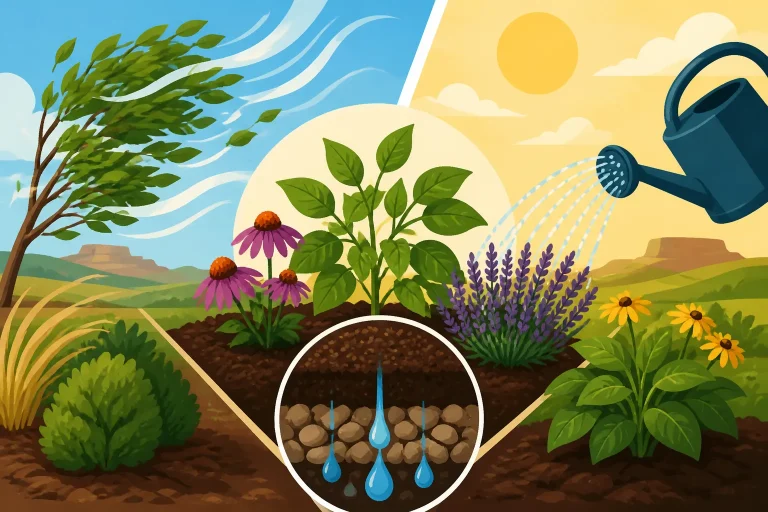
Soil is another part of the calendar. If a bed drains slowly, early planting may put seeds and roots into cold, wet conditions. If the soil dries quickly, wind and low moisture can become concerns as soon as plants are established. Raised beds may warm or drain differently from ground-level beds, but their behavior depends on their placement, construction, and soil mix. Learn how the bed responds rather than assuming its name tells the whole story. South Dakota Garden Climate: Soil Drainage, Wind, and Watering and How to Tell If Your Garden Soil Drains Well Enough for Vegetables cover these site-level factors.
Wind matters both before and after planting. It can dry beds, bend or damage tender growth, and make newly transplanted seedlings struggle. A protected site can help, but protection should not block necessary light or create a poorly ventilated corner. If wind is a persistent challenge, consider sturdier crop choices and ways to protect plants without treating the garden as a sealed space. Shielding South Dakota Crops From Hail, Strong Wind, and Dry Spells provides more on managing those exposures.
Keep a garden log with observations rather than trying to remember every spring. Record when the soil was workable, which crops went in, what the forecast was like, and where damage occurred. Note the first bed to dry and the last one to warm. These observations can make next season’s decisions more useful than a generic calendar. A record also helps distinguish a crop-timing problem from a drainage, wind, or seedling-care problem.
Microclimates are useful, but avoid letting a single favorable season set the rule for every year. If a sheltered bed performed well with an early planting, that is evidence about the bed, not a promise that the same decision will succeed under different weather. Keep tender crops flexible and use protection or delay when conditions call for it.
Use forecasts to decide whether to plant, wait, or protect
A calendar tells you when to start paying attention. A forecast helps decide what to do next. Before planting, check the expected overnight conditions for the garden’s area and consider the forecast across the period when the plant is most vulnerable. A forecast for the planting afternoon alone is not enough.
Forecasts are uncertain, especially for a particular yard. Use them as a risk signal rather than a guarantee. If cold conditions are possible, ask whether the crop can tolerate them, whether the bed is exposed, and whether you have a practical way to protect the plant. If the answer is uncertain, delay a tender crop when holding it is still reasonable. For a crop that is already in the ground, prepare protection ahead of time rather than waiting until damage seems imminent.
Check the forecast again as the planting window approaches. Weather can change, and a decision made while preparing a bed may need to be revised before transplanting. Watch for more than a frost symbol: cold nights, strong wind, rain, and rapid temperature changes can all affect young plants. Soil conditions matter too, particularly when heavy moisture or cold ground slows establishment.
Protection can reduce risk but does not make every date safe. Row covers, cloches, or other suitable barriers may help shield plants, yet they need to be secured and managed appropriately for the conditions. A cover can also trap heat when the day warms, so check plants rather than leaving protection in place without regard to changing weather. Follow product directions when using commercial materials, and seek local guidance if the right method is unclear. Using Floating Row Covers in High South Dakota Winds and Removing Frost Blankets in the Morning to Prevent Heat Damage address practical parts of protecting plants.
For transplants, hardening off is a separate step from frost protection. It means gradually helping indoor-grown plants adjust to outdoor light, wind, and temperature before they remain outside. Moving seedlings directly from a sheltered indoor setting into an exposed garden can be stressful even if no frost occurs. Begin the transition when conditions allow, and adjust it if the forecast turns harsh. Keep a backup place available for tender plants if they are not ready to stay outdoors.
When a forecast is uncertain, the best choice may be different for different crops. You might sow a cool-tolerant crop, leave tender seedlings indoors, and cover an established bed at the same time. That is not inconsistency; it is matching the action to the crop’s risk. A calendar built around a single date tends to hide those distinctions.
Turn the season into a flexible garden calendar
A useful planting calendar combines seasonal tasks with decision points. Instead of writing a fixed date beside each crop, note what must be true before that crop goes in. The result is a plan you can adapt when spring arrives early, late, or unevenly.
Start with a list of crops and sort them by method: direct sow, indoor start, or transplant. For each one, record its cold tolerance, any soil or temperature guidance on the packet, and its expected time to maturity. Mark which crops can be planted early and which should wait for more reliable warmth. If you have limited space under lights or in seed trays, prioritize crops that benefit most from being started indoors.
Then add site notes. Identify the beds that drain well, warm early, or receive shelter, along with those that remain cold, wet, or wind-exposed. Keep crops with different needs in appropriate locations when possible. A single planting date for the whole garden ignores these differences, while a bed-by-bed plan makes it easier to use favorable spots without putting the most tender plants at unnecessary risk.
A practical sequence might look like this:
- Review the frost information relevant to your area and treat it as a planning reference.
- Check each crop’s packet or label for its preferred method and conditions.
- Prepare beds when the soil is workable, not merely because a calendar says it is time.
- Sow crops that tolerate cool conditions when the bed and forecast suit them.
- Harden off indoor starts gradually and keep tender plants protected until outdoor conditions are appropriate.
- Recheck the forecast before transplanting or sowing a sensitive crop.
- Record what happened so the next season’s plan reflects your own garden.
The sequence is intentionally flexible. If the soil is too wet, wait on bed work even if the weather is mild. If a cold snap appears likely, postpone a tender transplant if it can be held in suitable conditions. If a crop is already established, consider protection and monitor it instead of assuming that a map date will settle the question.
Avoid planting everything at once just to feel caught up. Staggering work can make it easier to respond to weather and reduce the consequences of a single cold event. It can also spread harvests and make watering, weeding, and protection easier to manage. The right pace depends on the size of the garden, the crops, and the time you can devote to it.
Finally, leave room for uncertainty in the plan. Write a preferred window and a backup option, rather than treating the first choice as mandatory. A flexible calendar is more useful than a list of dates that cannot account for a cold, wet spring or an unusually favorable stretch of weather. For a broader planning framework, see South Dakota Vegetable Gardening: Crop Selection and Timing and Spring Garden Prep Checklist for South Dakota Soils and Seeds.
Frequently Asked Questions
Is there one safe planting date for all of South Dakota?
No single date can guarantee safety for every garden and crop. Use the frost map as a reference, then consider the crop, forecast, soil, and conditions at your site.
Should I wait until the last spring frost date to plant anything?
Not necessarily. Cool-tolerant crops may suit an earlier window, while tender crops need more caution. Check crop-specific guidance and the conditions in your garden.
Can a protected bed make it safe to plant tender crops earlier?
Protection may reduce exposure, but it does not eliminate risk. Monitor the forecast, use suitable materials correctly, and be prepared to uncover plants if daytime conditions warm.
What should I do if the forecast changes after planting?
Assess the crop and its exposure, then decide whether appropriate protection is practical. Keep monitoring conditions, and record what happened so you can refine your future planting calendar.
Disclaimer
This article is for general informational purposes only and does not constitute professional advice. Laws, prices and regulations vary by location and change over time. Consult a qualified professional for guidance on your specific situation. South Dakota Gardening Guide is not a government agency and is not affiliated with any university extension, state department of agriculture or other government agency.